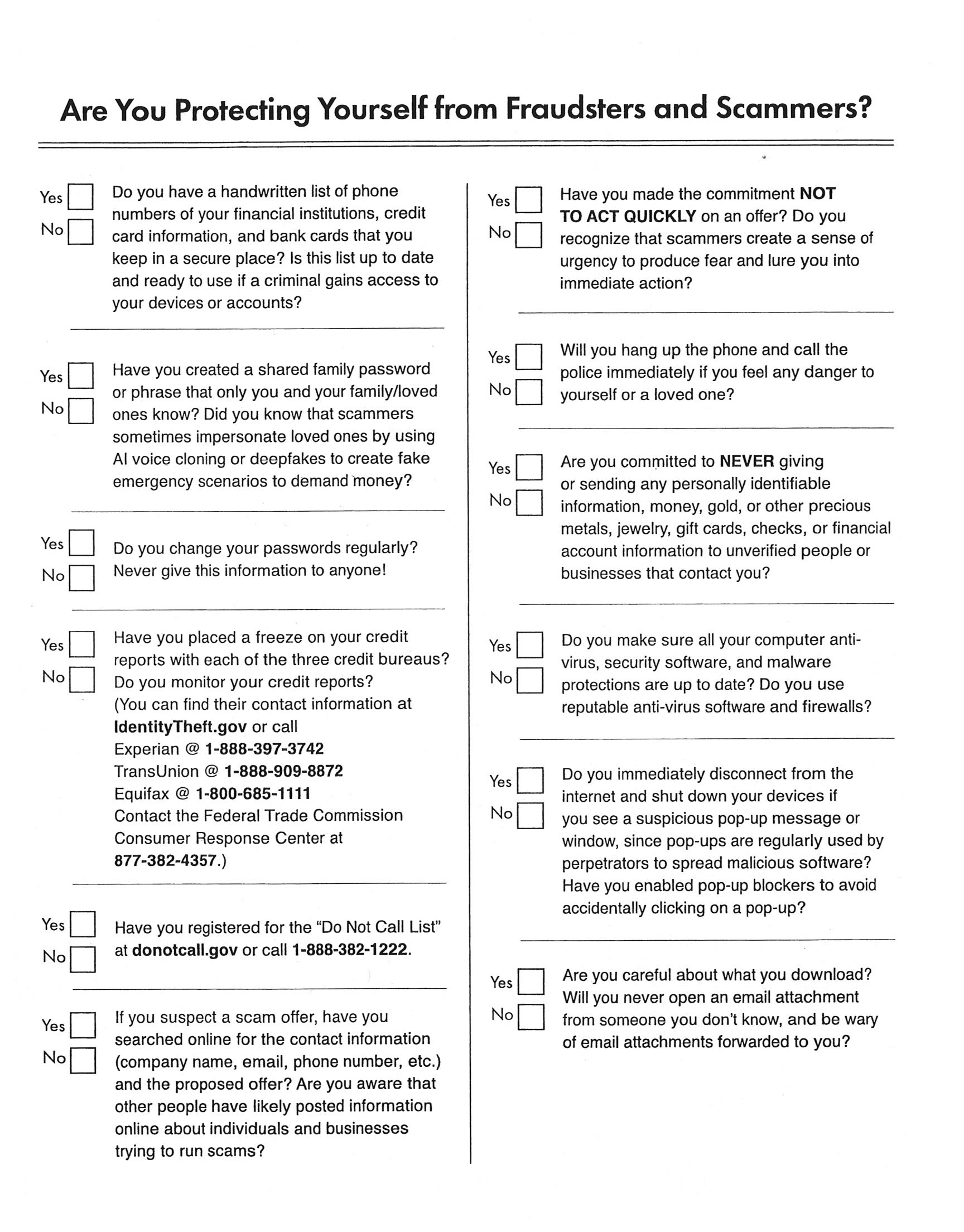
Beware! Frauds and Scams Take Big Bites
/Each year, millions of older Americans are victims of financial fraud or confidence schemes—including phone, email, lottery, or sweepstakes scams—just to name a few. Criminals gain the trust and befriend older Kansans, communicate with them directly over the phone, online, or through the mail. After scammers earn their targets' trust, they often keep a scheme going because they are after significant financial gain.
Older Kansans are fraudsters' targets because they are trusting and polite. Of course, most usually have financial accounts, own homes, and have good credit scores—factors that make them attractive to scammers. Also, older Kansans may be less likely to report fraud because they don't know how or may be too ashamed at having been scammed. might also be concerned that their relatives will lose confidence in their abilities to manage their own financial affairs. When an older Kansan does report a crime, they may be unable to supply adequate, detailed information to investigators.
The Baker Fraud Report, edited by Steve Baker, who has more than 27 years of experience with the Federal Trade Commission, is a credible source of information about current scams and frauds affecting Americans. You can find this publication at bakerfraudreport.com. Check out Keynotes and the Sunflower Fair for information from your Agency on Aging about Frauds and Scams.
Common Elder Fraud Schemes
Scammers targeting older Americans use many types of schemes. In these scams, criminals pose as:
Tech Support Representatives: A bogus technology representative will connect and offer to fix non-existent computer issues. Unsuspecting seniors will give scammers remote access to their devices and compromise sensitive information.
Government Impersonators: Government employees may connect with you and threaten to arrest or prosecute you unless you agree to provide finds or other payments. Note: government employees with Medicare, Social Security, or law enforcement will not call you unless you call them first.
Sweepstakes/Charity/Lottery Officials: People claiming to work for legitimate charitable organizations contact you to gain your trust. They often claim that you have won a (fake) foreign lottery or sweepstakes--then they will tell you that you must pay a "fee" to collect the prize.
Home Repair Helpers: Criminals appear in person and charge you, a homeowner, in advance for home improvement services that they will never provide, or they fry to sell fraudulent warranties.
Family/Caregivers: Relatives or acquaintances of older Kansans may take advantage of you to get your money or valuables.